
Onslow County Arrest Records and Court Charges
Onslow County arrest records begin on the law enforcement side. They may involve the Onslow County Sheriff's Office, a local police agency, a magistrate, and the jail booking process. The sheriff's official material draws a sharp line between web records and app records: mugshots and arrest records are not published on the sheriff website, while inmate search and mugshot details are available through the Onslow County Sheriff's Office app. That distinction matters because a booking entry is not the same thing as the formal court charge record.
Court charge records begin when a criminal accusation is filed and tracked in the state court system. In Onslow County, state criminal cases are handled through District Court and Superior Court, with records kept by the Clerk of Superior Court. Criminal District Court handles traffic tickets and most misdemeanor cases, while Superior Court handles felony matters after indictment or other felony procedure. The full case file and final sentence belong with Onslow County criminal court records; the custody and booking side belongs with the jail and inmate record.
The Onslow County courthouse area has several relevant counters. The Clerk of Superior Court answers case-record questions at 910-478-3600. The Magistrate's Office at 717 Court Street handles many initial appearance, warrant, and bond functions and can be reached at 910-478-3619. The Sheriff's Office is also at 717 Court Street and uses 910-455-3113 for its main line.
Onslow County Charges After Arrest
Charges after arrest are shaped by more than the booking event. Law enforcement may arrest a person or present facts to a magistrate. A magistrate may address probable cause, bond, and first appearance issues. The District Attorney for Prosecutorial District 5 then decides how to prosecute the case, whether to dismiss, reduce, amend, or negotiate charges, and whether a felony matter should proceed in Superior Court. The official District Attorney listing names Ernie Lee for Prosecutorial District 5, which includes Onslow, Duplin, Jones, and Sampson counties.
The District Attorney's office is the prosecution office, not the jail and not the clerk. It appears in charge-record research because the prosecutor controls many court-facing decisions after arrest. A charge listed at booking may not remain the same charge at disposition. It may be superseded by indictment, amended by the prosecutor, dismissed in District Court, or resolved by plea or trial.
| Record point | Office or system | What it helps confirm |
|---|---|---|
| Booking or custody | Sheriff app and detention desk | Jail status, mugshot in the app, and custody-related information. |
| Initial process and bond | Magistrate's Office | Bond type, warrant or order status, and first appearance context. |
| Filed criminal case | eCourts Portal and clerk terminals | Case number, charge list, hearings, disposition, and payment eligibility. |
| Prosecution decision | District Attorney | Dismissal, reduction, indictment, plea negotiation, and trial posture. |
Find Onslow County Arrest Records
The court side of an Onslow County arrest record is searched through the North Carolina eCourts Portal, public self-service terminals at clerk offices, and local paper files at the Onslow County Clerk of Superior Court. The Portal includes Smart Search for case information, Search Hearings for hearing dates, Make Payments for eligible criminal and infraction matters, and NC Judgment Search. The Portal requires JavaScript and cookies, and Tyler Technologies uses a CAPTCHA challenge every ten minutes for anonymous, registered, and elevated users.
- Open the eCourts Portal and start with Smart Search for the defendant name or known case number.
- Use Search Hearings if the goal is a court date, courtroom, attorney, bar number, judicial officer, or party search.
- Open the matching case and compare the charge list, case type, court division, hearing data, and disposition fields.
- If the record is not remote, use a clerk public terminal or ask the Onslow County Clerk of Superior Court about the paper file.
For custody status after arrest, use the sheriff app's Jail Info tool or call the detention desk at 910-937-1475. North Carolina Department of Adult Correction searches are different. The DAC offender search covers state prison, probation, and parole records, and the DAC public-records page says it does not include county jail information.
The N.C. DAC public records page is relevant when a charge led to state custody or supervision, not when someone is only in the Onslow County jail before trial. A charge can appear in a court case long before a conviction or state sentence exists.
Onslow County Charging Documents
A charging document is the paper or electronic filing that tells the court what criminal offense is alleged. In North Carolina court records, the exact document depends on the offense level and case stage. Misdemeanor and traffic cases often begin in District Court. Felonies may begin with arrest and first appearance steps, then move toward Superior Court after indictment or another felony charging path. One arrest can produce more than one charge.
| Document | Common role | How to read it |
|---|---|---|
| Complaint or warrant-based charge | Starts or supports a criminal accusation after arrest or magistrate review. | Look for the offense, statute, probable-cause basis, and bond or service notes. |
| Information | Prosecutor-filed charging document used in some criminal cases. | Compare the filed offense to earlier booking or warrant language. |
| Indictment | Grand-jury charging document for many felony prosecutions. | Check whether it supersedes, narrows, or expands earlier felony charges. |
The North Carolina defender directories and the Onslow IDS county page are useful starting points for appointed-counsel routing. People who cannot afford counsel usually request court-appointed counsel through the court process and financial eligibility paperwork.
Onslow County Arrest Record Sources
The official Onslow County Sheriff's Office homepage is a source for sheriff contact information, app notices, Crime Stoppers, and public safety links.
Use the sheriff source for law enforcement channels, but use eCourts or the clerk when the question is whether charges have been filed in court.
The N.C. DAC public records online page explains the state custody boundary for offender records.
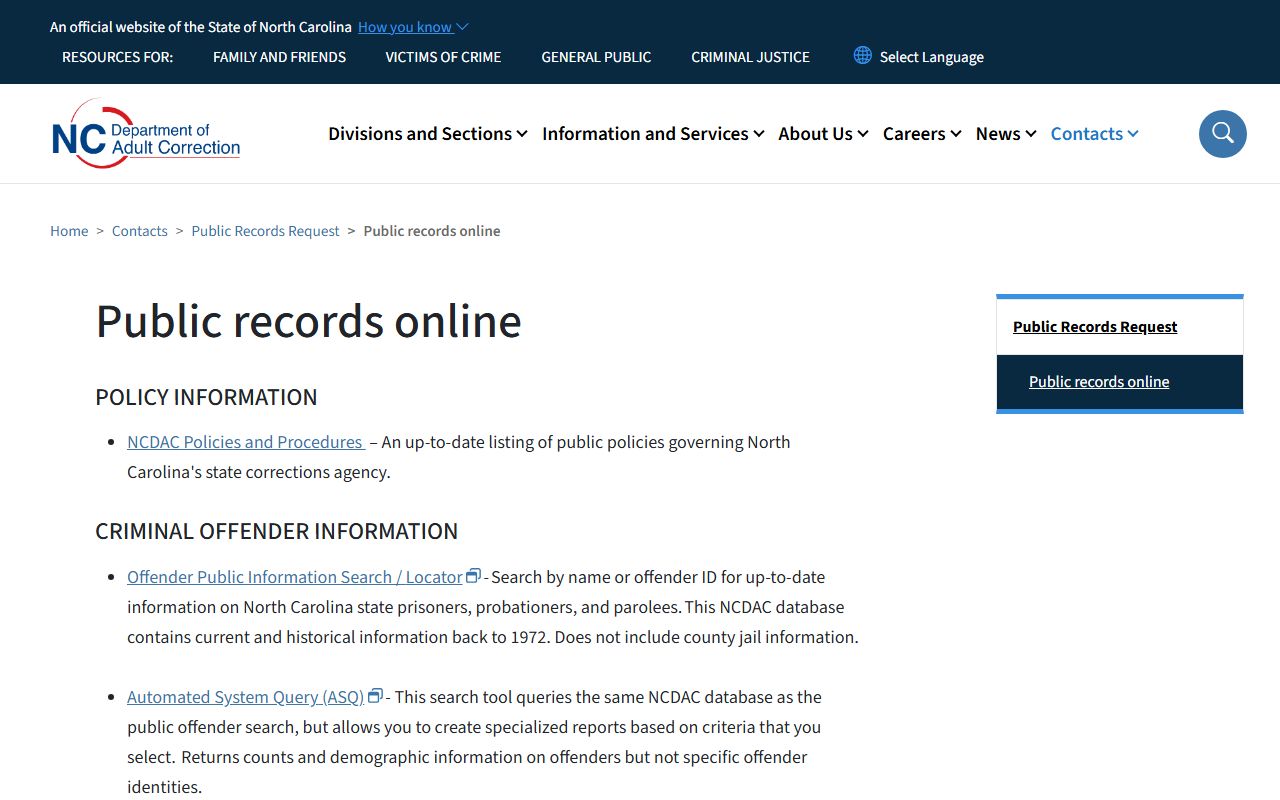
That boundary is important in Onslow County because the county jail, court charges, and state prison or supervision records are separate systems.
Onslow County Charge Status
Charge status can change several times. A pending charge is only an accusation. An amended charge means the charge language, statute, or level changed. A reduced charge may reflect plea negotiation or prosecutorial review. A dismissed charge means the prosecution did not continue on that count. A nolle prosequi, often shortened to "nol pros," means the prosecutor has chosen not to proceed on that charge.
| Status | Plain meaning | Why it matters |
|---|---|---|
| Pending | The charge remains open and has not reached final disposition. | Check the next hearing date and bond or release conditions. |
| Amended or reduced | The filed offense has changed from an earlier version. | Do not rely on the first booking label as the final court charge. |
| Dismissed | The charge was not carried to conviction. | Dismissal may support expunction review under North Carolina law. |
| Nolle prosequi | The prosecutor elected not to proceed on that charge. | The docket may still show the history unless expunged or sealed. |
| Disposition entered | The court recorded an outcome such as guilty, not guilty, or judgment. | The disposition is the key field for background and case-result review. |
Note: The county NextRequest portal is not the right channel for court charges, background checks, marriage, divorce, or property records.
Onslow County Charges vs Convictions
A charge is not a conviction. Onslow County court records may show allegations, first appearances, bond decisions, amendments, dismissals, pleas, trials, and later judgment. The difference matters for employment, housing, military, licensing, and expunction questions. A person can have a public charge record with no conviction, and a person can have several charges from one arrest with different outcomes for each count.
| Point of comparison | Charge | Conviction |
|---|---|---|
| Meaning | An accusation filed after arrest, citation, warrant, or indictment. | A final court result after a guilty plea, verdict, or judgment. |
| Proof level | Usually tied to probable cause or formal accusation. | Requires plea or proof beyond a reasonable doubt. |
| Where found | eCourts case data, clerk terminals, paper files, and hearing records. | Disposition and judgment fields in the criminal case file. |
| Expunction issue | Dismissed or not-guilty charges may have a statutory path. | Certain nonviolent convictions have separate limits and waiting periods. |
Public Access to Charge Records
North Carolina public access law treats many court records as public, but it does not make every law enforcement record public. N.C.G.S. 132-1 broadly defines public records. N.C.G.S. 132-6 covers inspection and copies. Court record keeping and electronic records are governed by N.C.G.S. 7A-109. Criminal investigation and intelligence records have special limits under N.C.G.S. 132-1.4.
That means filed court charges may be visible through eCourts, public terminals, or clerk files, while an investigative report, officer notes, body-camera material, or active search-warrant material may be withheld or redacted. Personal identifiers, financial account data, juvenile details, protected victim information, and sealed material may also be removed from public view.
Important: Do not use casual charge lookups for FCRA-regulated screening decisions such as credit, employment, housing, insurance, or tenant review.
Restricted Onslow County Charge Records
Some Onslow County charge records do not appear in ordinary public searches. Juvenile delinquency and undisciplined records are confidential under N.C.G.S. 7B-3000. Abuse, neglect, and dependency files are withheld from public inspection under N.C.G.S. 7B-2901. Adoption records are sealed under state law. Expunged records are cleared from public access as directed by the court order.
Expunction is a court process, not a website edit. For dismissed charges and not-guilty findings, N.C.G.S. 15A-146 is the key statute. For certain nonviolent misdemeanor and felony convictions, N.C.G.S. 15A-145.5 sets waiting periods and conditions. The petition is filed in the county where the charge or conviction occurred, so an Onslow County case starts with the Onslow County Clerk of Superior Court.
Onslow County Bond Safety
The sheriff's 2026 bond-scam alert is highly relevant to arrest records and charges. Scammers have impersonated detention staff and demanded bond money from families. Official bond payments must be made through the Onslow County Magistrate's Office or a licensed local bail bonding company. Legitimate inmate information should come from the free sheriff app or the detention visitation desk at 910-937-1475.
The N.C. DAC criminal offender search is a state-level custody and supervision source, not an Onslow County jail roster.
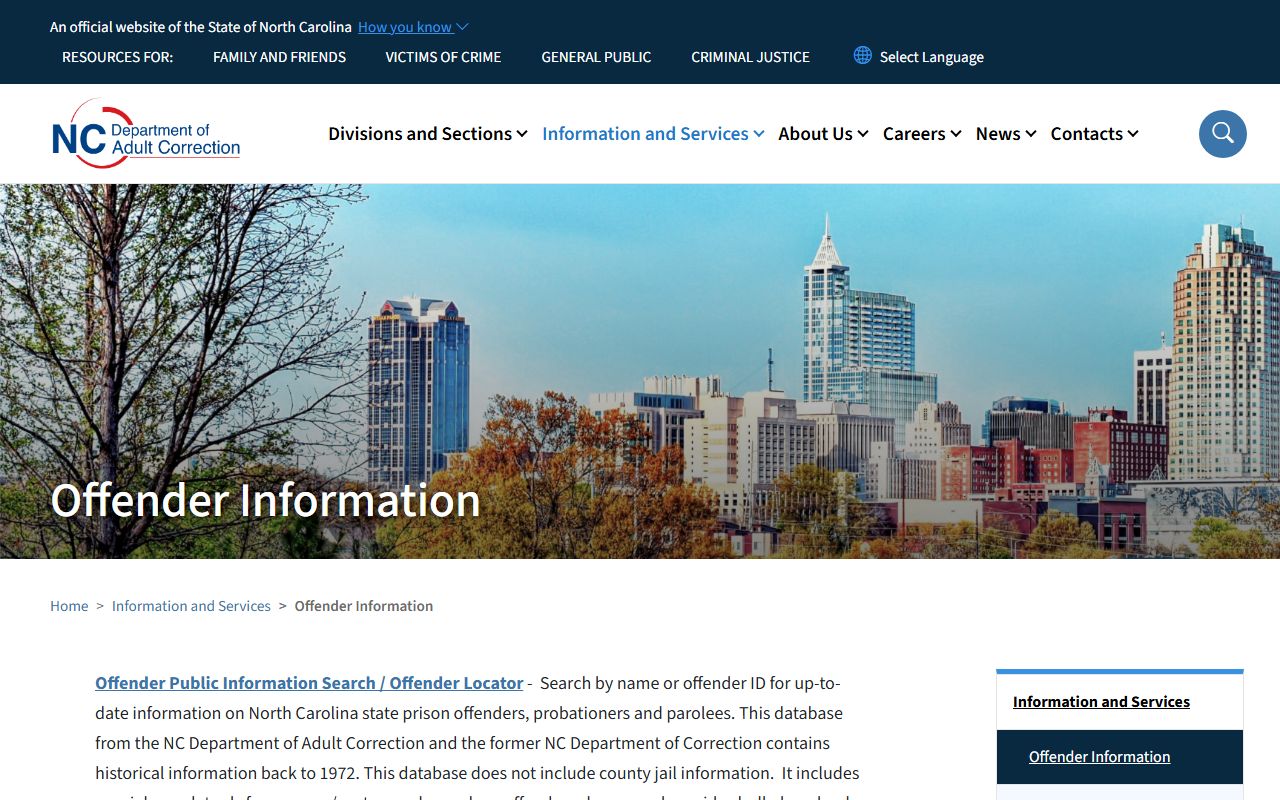
Charge and custody records can move fast after arrest, so state search results should be checked against the Onslow court file and sheriff app when the person is still in county custody.
The official Onslow County Sheriff's Office bond scam alert gives the safe payment rule for families checking jail and charge information. Bond instructions should be verified with the magistrate, detention desk, or licensed local bond company before money changes hands.
The North Carolina defender directories can help locate appointed-counsel resources when a defendant needs legal help with charges after arrest.
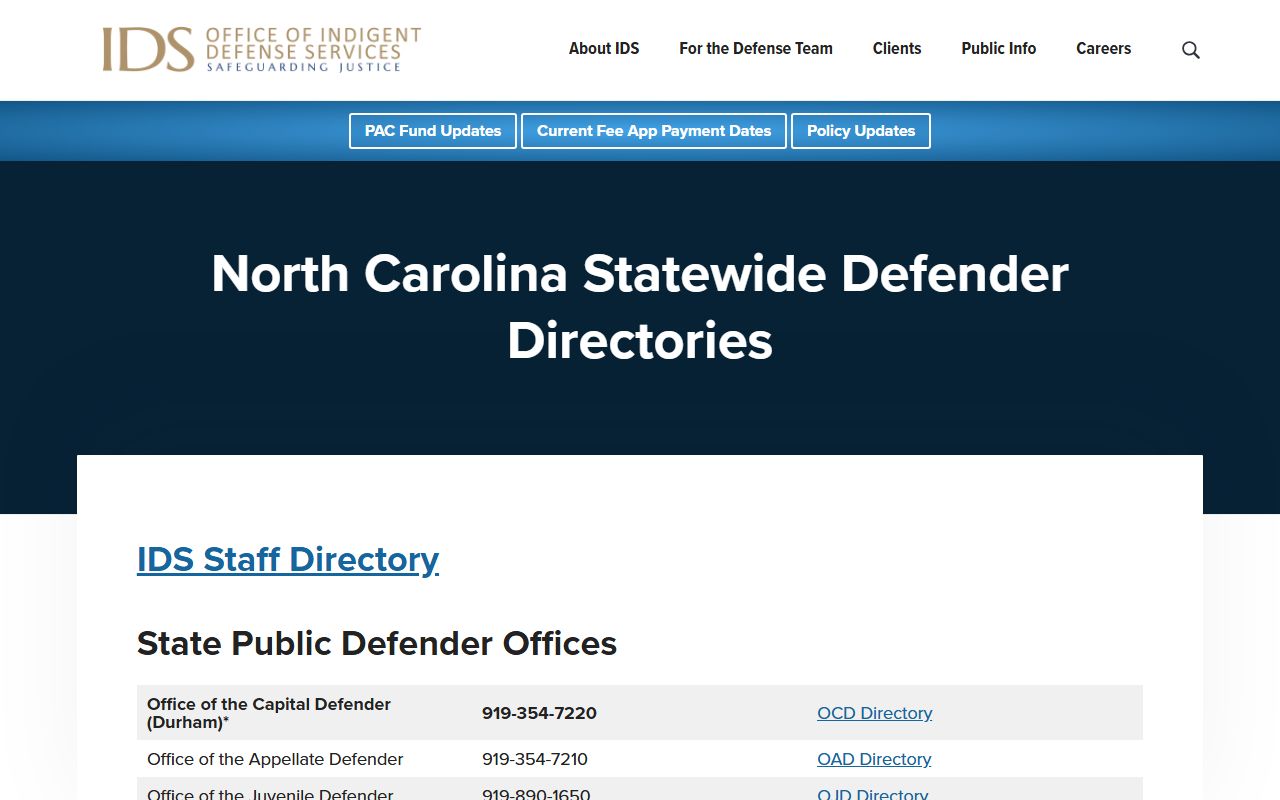
Counsel can also check whether the court charge, bond condition, warrant, and next hearing are being read from the correct official record.