Start with Onslow County Court Records Online
Remote access to many Onslow County court records starts with the North Carolina eCourts Portal. The Portal is the public entry point for Smart Search, hearing searches, online payments for eligible criminal and infraction matters, and the NC Judgment Search index. The Onslow County Judicial Branch page also links to court dates, civil calendars, criminal calendars, forms, local rules, and online services, so users who need both case data and schedule data should check the county court page and the Portal together.
The Portal has technical limits that matter during an Onslow County court records lookup. JavaScript and cookies must be enabled, supported browsers are expected, and Tyler Technologies requires a CAPTCHA challenge every ten minutes for anonymous, registered, and elevated access users. Registration is available, but anonymous public access is not the same as attorney elevated access or licensed Remote Public Access. For case-specific questions, the official routing remains the Clerk of Superior Court in the county where the case is assigned.
- Open the eCourts Portal and choose Smart Search for court records and case information.
- Search with a case number when available, or use party names that match the case type.
- Use Search Hearings when the goal is a court date, courtroom, judicial officer, attorney, or hearing setting.
- Review the case summary, court level, party names, hearing entries, disposition, and public document access shown for the case.
- Contact the Onslow County Clerk of Superior Court when the online result is unclear, missing, sealed, older, or needs a certified copy.
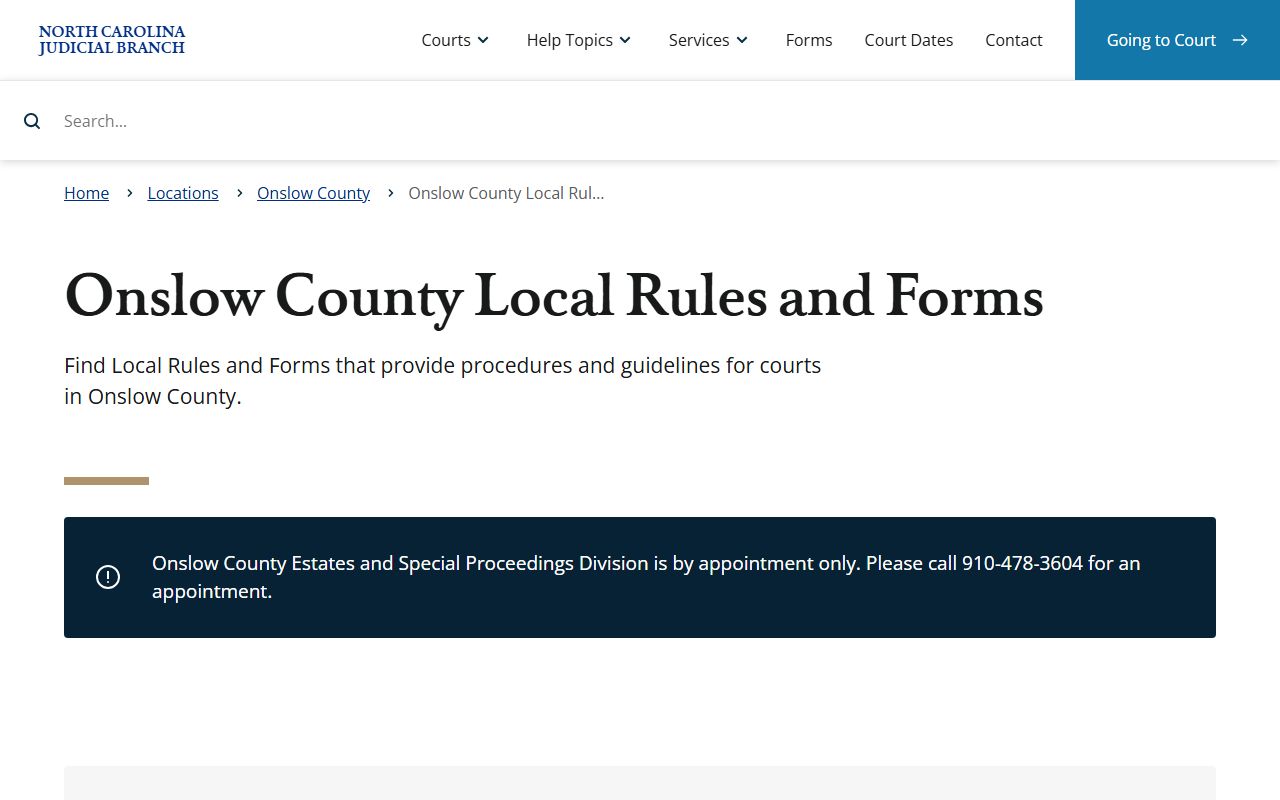
The N.C. Judicial Branch Onslow County local rules and forms page is useful when a court record refers to a local administrative schedule, required form, or court practice that is not obvious from the docket entry alone.
The official local rules and forms source shows where Onslow County court users find county-specific court materials.
Onslow County Court Records Search Fields
Portal and clerk-terminal searches do not all expose the same fields. Smart Search is the broad case-search tool, while Search Hearings is aimed at court dates and sessions. Clerk public terminals add fields that are useful for criminal matters, including victim or witness name, and also provide public access to civil, special proceeding, and estate case information. Onslow County court records may therefore require more than one search path before the file is found.
| Field Label | Type | Required | Notes / Format |
|---|---|---|---|
| Smart Search | Search module | Unspecified | Used for court records and case information in eCourts Portal. |
| Search Hearings | Search module | Unspecified | Training materials list case number, party, business, attorney, bar number, judicial officer, and courtroom searches. |
| Make Payments | Payment module | Conditional | Supports eligible costs, fees, restitution, attorney fees, probation fees, and parole fees. |
| NC Judgment Search | Search module | Unspecified | Judgment index tied to court record keeping authority under state law. |
| Defendant name | Terminal field | Optional | Criminal case lookup on clerk public terminals. |
| Victim or witness name | Terminal field | Optional | Criminal terminal searches may use these names when available. |
| Party name | Terminal field | Optional | Civil and special proceeding terminal searches may use party names. |
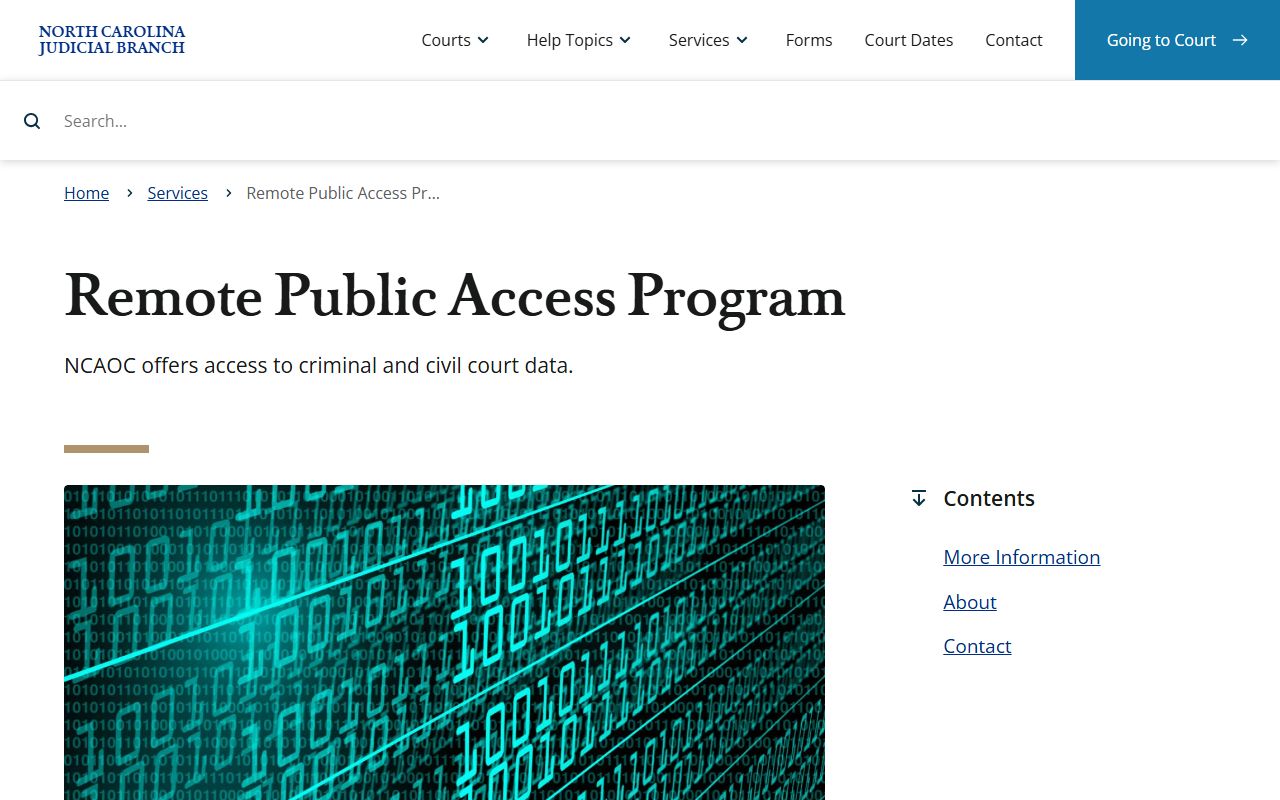
For users with a continuing business need, the NCAOC Remote Public Access Program is separate from ordinary public Portal searching. It is a licensed access program for statewide criminal and civil information, not a replacement for the clerk's paper file or the public counter.
The Remote Public Access Program overview describes the licensed data channel for high-volume court record users.
Onslow County Court Records at the Clerk
The local record custodian for state trial court files is the Onslow County Clerk of Superior Court. The N.C. Judicial Branch help topic on obtaining court records states that criminal case information is available at public self-service terminals in clerk offices in any county. Civil, special proceeding, and estates information can also be searched on public terminals. Paper case files are viewed by visiting the clerk's office in the county where the case is located, and staff can provide copies for a fee.
For Onslow County court records, that means a remote search is only the first layer. A case may have public docket data online while the paper file holds pleadings, orders, exhibits that are not remotely viewable, or older records that need clerk assistance. Public terminals are also useful when a person has a defendant name, case number, party name, or witness name but cannot find the case through a remote browser session.
Onslow County Clerk of Superior Court
Onslow County Courthouse
625 Court Street
Jacksonville, NC 28540
910-478-3600
Monday-Friday, 8:00 AM-5:00 PM
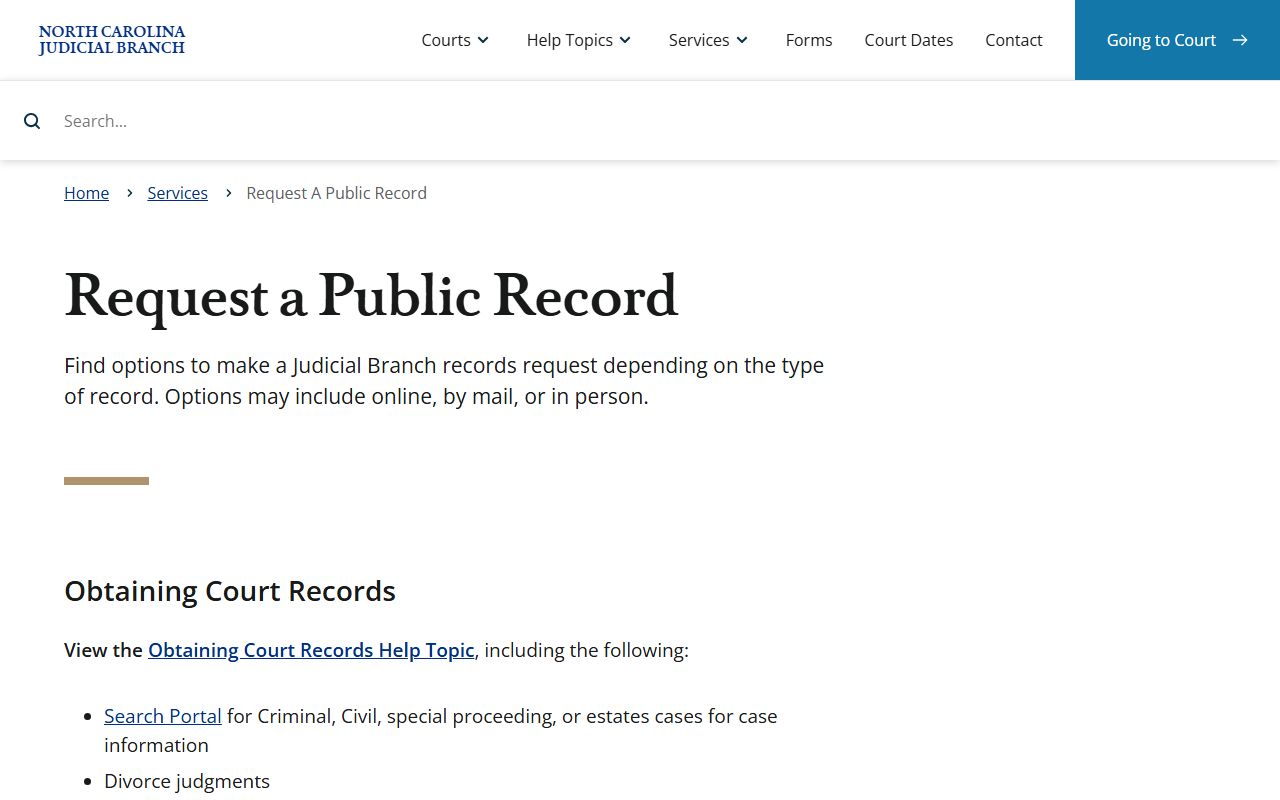
The Judicial Branch public-record request routing page separates administrative record requests from case-file access.
Types of Onslow County Court Records
Onslow County court records come from Superior Court, District Court, magistrate-related proceedings, and clerk-handled estate or special proceeding files. Superior Court handles felonies, civil cases over the state threshold, major civil matters, and appeals from District Court. District Court handles many misdemeanors, infractions, traffic cases, domestic matters, juvenile matters, small claims appeals, and magistrate matters. The Clerk of Superior Court keeps the local case files for these state court matters.
- Criminal Superior Court records include felony indictments, plea documents, motions, judgments, sentencing orders, probation terms, and notices of appeal.
- Criminal District Court records include misdemeanors, infractions, initial appearances, bond conditions, traffic cases, and many first settings.
- Civil court records include higher-value Superior Court cases, District Court civil actions, landlord-tenant cases, domestic files, and small claims appeals.
- Estate and special proceeding records include wills, estate administration, guardianships, foreclosures as special proceedings, and clerk orders.
- Judgment records may appear in the Portal's NC Judgment Search, while traffic court records remain separate from state driver history held by NCDMV.
Marriage certificates, deeds, notary indexes, military discharges, and most vital certificates are not Onslow County court records. Those route to the Onslow County Register of Deeds. County government records may use the Onslow County NextRequest portal, but that portal expressly excludes background checks, marriage, divorce, property, and court-related records.
What Onslow County Court Records Show
A court record is not just one document. It may include a docket, party data, court level, filings, hearings, orders, judgments, financial entries, and a final disposition. In criminal cases, the record can include pleas, charges, sentencing, and probation terms. In civil cases, it can show parties, claims, motions, judgments, and appeals. Some public fields appear online, some appear at terminals, and some must be reviewed in the paper file.
| Field | What It Shows |
|---|---|
| Case number | The primary identifier used in Portal, terminal, and clerk searches. |
| Court division | Whether the matter is in Superior Court, District Court, estate, special proceeding, or another case category. |
| Party names | Defendant, plaintiff, petitioner, respondent, decedent, fiduciary, attorney, or other indexed role. |
| Docket entries | Filings, motions, orders, continuances, hearings, judgments, pleas, dismissals, and notices of appeal. |
| Hearing data | Hearing date, time, courtroom, judicial officer, attorney fields, and session details when public. |
| Financial entries | Fines, costs, restitution, attorney fees, probation fees, parole fees, or court costs when applicable. |
| Restrictions | Redactions, sealed items, juvenile restrictions, adoption limits, expunction effects, and personal identifier protections. |
For the criminal side of the case file, the separate Onslow County criminal court records page focuses on charges, pleas, dispositions, and sentencing.
Public Access to Onslow County Court Records
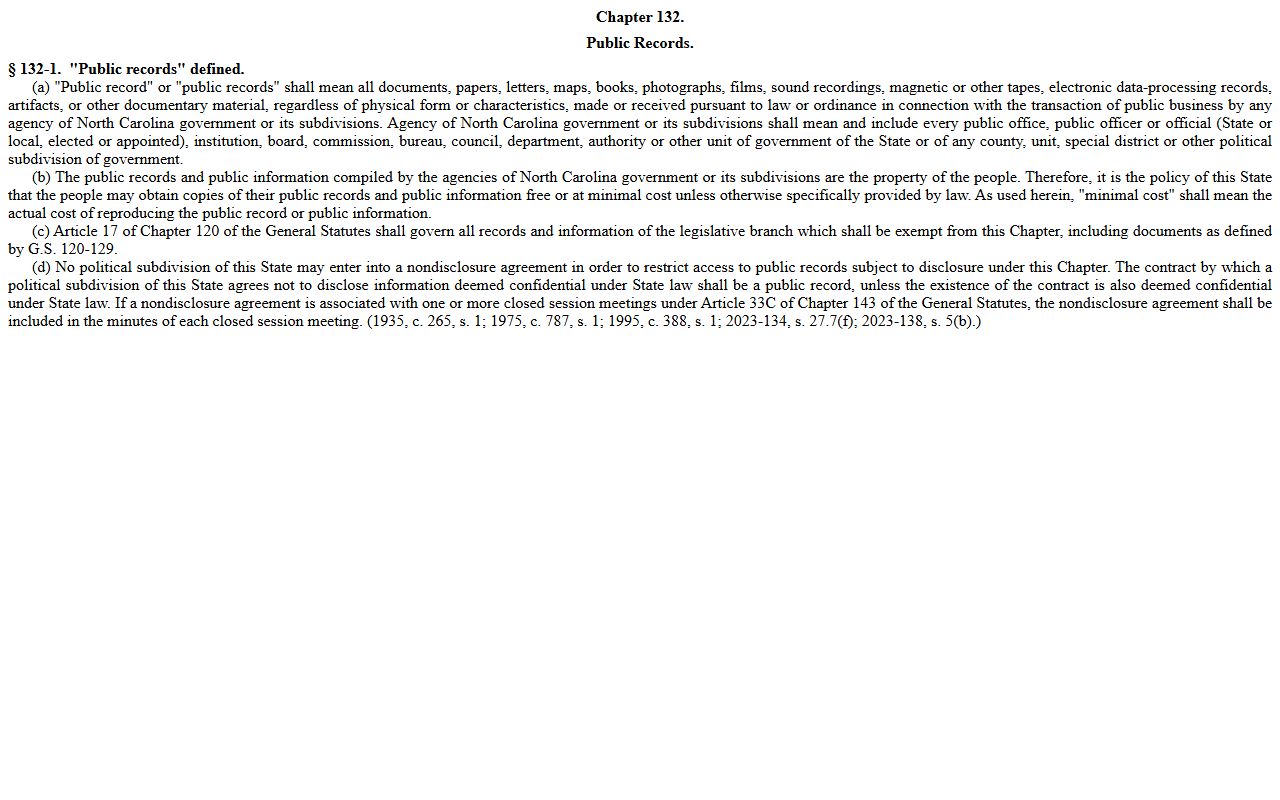
North Carolina public access rules are broad, but they do not make every record public in the same way. N.C.G.S. 132-1 defines public records broadly as documentary materials made or received in connection with public business. Court record keeping and electronic court records are also governed by state court statutes and Judicial Branch systems. The practical result in Onslow County is layered access: Portal for public remote data, public terminals for broader clerk search access, and local paper files for documents that are not online.
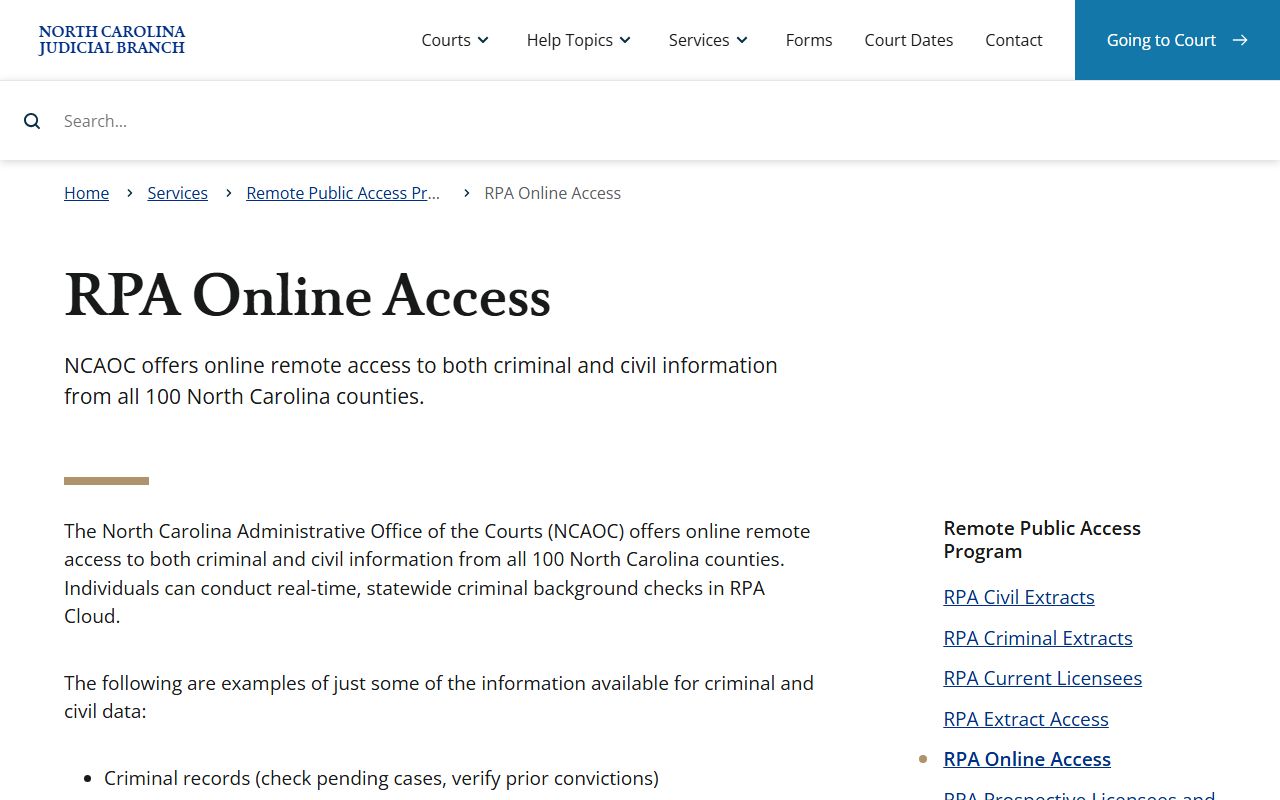
RPA Online Access is the licensed statewide option for users approved under the Remote Public Access Program. It can provide remote criminal and civil data from all 100 counties, but it is not the same as anonymous public Portal use. It also does not turn sealed, confidential, or expunged Onslow County court records into public records.
The RPA Online Access page explains the licensed remote channel for statewide criminal and civil data.
Note: Onslow County NextRequest handles county government records, but court-related records route to the Judicial Branch or clerk.
Restricted Onslow County Court Records
Some Onslow County court records are not available through ordinary Portal, terminal, clerk-counter, or records-request channels. Juvenile delinquency and undisciplined records are confidential under state juvenile law. Abuse, neglect, and dependency files are withheld from public inspection except as allowed by court order. Adoption records are confidential and sealed. Expunged records are cleared from public access as directed by the expunction order, though exceptions may exist for certain law enforcement or court uses.
Criminal investigation and intelligence records have separate limits under N.C.G.S. 132-1.4. That matters when a user is looking for arrest reports, search warrant materials, body-camera records, or open investigative files rather than the case file kept by the court. Personal identifiers such as Social Security numbers, financial account data, protected victim information, and certain minor information may also be redacted from otherwise public court files.
The public-records definition in N.C.G.S. 132-1 is broad, but other statutes create important limits.